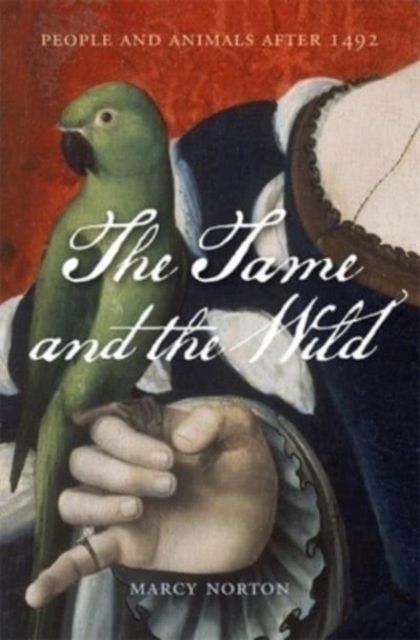
The Tame and the Wild : People and Animals after 1492
€34.67
Buy and save
Buy and earn €0.83 Loyalty for your next purchase
Loyalty is a discount program that lets you buy products and earn points to redeem on your next purchase. Your Loyalty balance is updated when you pay online or in-store. The Loyalty amount shown on this page can be recalculated at the checkout.
In stock: 1 available
The Tame and the Wild : People and Animals after 1492
Product Details
Author: Marcy Norton
ISBN: 9780674737525
Publisher: Harvard University Press
Publish date: 9 January 2024
Pages: 438
Binding: Hardcover
Language: English
Subjects: History, Latin America, Indigenous Peoples in the Americas, World, Americas (North, Central, South, West Indies), Caribbean & West Indies, Nature, Animals, Wildlife, Science, Life Sciences, Zoology, Social Science, Anthropology, Cultural & Social
A dramatic new interpretation of the encounter between Europe and the Americas that reveals the crucial role of animals in the shaping of the modern world.When the men and women of the island of Guanahani first made contact with Christopher Columbus and his crew on October 12, 1492, the cultural differences between the two groups were vaster than the oceans that had separated them. There is perhaps no better demonstration than the divide in their respective ways of relating to animals. In The Tame and the Wild, Marcy Norton tells a new history of the colonization of the Americas, one that places wildlife and livestock at the center of the story. She reveals that the encounters between European and Native American beliefs about animal life transformed societies on both sides of the Atlantic.
Europeans' strategies and motives for conquest were inseparable from the horses that carried them in military campaigns and the dogs they deployed to terrorize Native peoples. Even more crucial were the sheep, cattle, pigs, and chickens whose flesh became food and whose skins became valuable commodities. Yet as central as the domestication of animals was to European plans in the Americas, Native peoples' own practices around animals proved just as crucial in shaping the world after 1492. Cultures throughout the Caribbean, Amazonia, and Mexico were deeply invested in familiarization: the practice of capturing wild animals--not only parrots and monkeys but even tapir, deer, and manatee--and turning some of them into "companion species." These taming practices not only influenced the way Indigenous people responded to human and nonhuman intruders but also transformed European culture itself, paving the way for both zoological science and the modern pet.
Display prices in:EUR